The Pressure Test: What Water Flow Tells You About a Building's Hidden Infrastructure
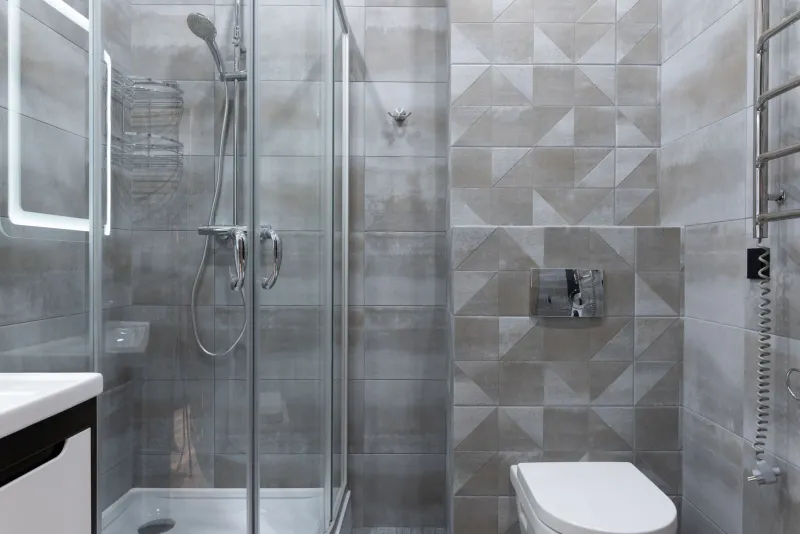
There is a practical test that costs nothing, requires no equipment, and can be completed in under three minutes during any apartment tour. Run the shower at full capacity. Then, without turning it off, run the bathroom sink simultaneously. Note what happens to the flow. If the shower pressure drops noticeably, or if the sink reduces to a trickle, you have just learned something that the leasing brochure will never tell you.
Water pressure behavior is one of the most information-dense signals available to anyone evaluating an urban residential building. It reflects the condition of supply lines, the adequacy of the building's booster pump system, the maintenance history of fixtures and internal piping, and—perhaps most importantly—the degree to which building management has invested in infrastructure that residents never see. Understanding how to interpret these signals is a practical skill with direct financial implications.
The Mechanics of Urban Water Delivery
In low-rise residential structures, municipal water pressure is often sufficient to serve all units directly. Urban high-rises operate differently. Buildings above six or seven stories typically rely on booster pump systems to maintain adequate pressure at upper floors, and many use roof-mounted or mid-building storage tanks as part of a pressure-zone management strategy. The engineering involved is well-established, but its effective implementation—and, critically, its ongoing maintenance—varies considerably across properties.
When a building's pressure delivery system is functioning correctly, residents on the twenty-second floor should experience water flow comparable to that on the fourth floor. Variations will always exist to some degree, governed by physics, but significant discrepancies between floors, or pronounced pressure drops during peak morning and evening usage windows, indicate system limitations that go beyond normal engineering tolerance.
These limitations do not resolve themselves. They compound over time.
Corrosion, Age, and the Infrastructure You Cannot See
The majority of urban residential buildings in the United States were constructed with galvanized steel or copper supply lines. Both materials are durable under ideal conditions, but both are subject to corrosion, mineral scaling, and mechanical degradation over time. Galvanized steel is particularly vulnerable to internal rust accumulation, which progressively narrows the effective pipe diameter and reduces flow rates. Copper, while more corrosion-resistant, is susceptible to pinhole leaks in environments with aggressive water chemistry—a condition more common than most residents realize in cities with older municipal supply infrastructure.
The critical issue is that pipe degradation is largely invisible until it becomes severe. A building whose internal supply lines are thirty percent narrowed by mineral scaling will not announce this condition through visible symptoms. It will announce it through water pressure that seems slightly inadequate, through fixtures that require cleaning more frequently than expected, and through a chronic inability to maintain consistent flow during simultaneous high-demand periods.
For prospective residents, this means that water pressure behavior during a tour is not merely a comfort indicator. It is a proxy measurement for the condition of infrastructure that no amount of cosmetic renovation can address without significant capital expenditure.
Conducting a Practical Pressure Assessment
A structured approach to pressure evaluation during a building tour does not require technical expertise. The following sequence provides meaningful data points that can inform leasing and purchasing decisions.
Test simultaneous fixture operation. As described above, running the shower and sink concurrently reveals how the unit's supply lines respond to concurrent demand. A well-maintained system with adequate pipe diameter and booster pressure will show minimal variation. Significant drops indicate either localized fixture issues or broader infrastructure constraints.
Visit the building during peak usage hours. Morning hours between seven and nine, and evening hours between six and eight, represent the highest simultaneous demand periods in most residential buildings. A building that delivers adequate pressure at two in the afternoon may perform very differently when dozens of residents are showering simultaneously. Request a second showing during these windows if the initial tour occurs at an off-peak time.
Request unit placement information relative to the building's pressure zones. In buildings with mid-rise pressure zone breaks, units near the top of each zone tend to experience the lowest pressure. A knowledgeable property management team should be able to explain how the building manages pressure across floors. An inability or unwillingness to answer this question directly is itself informative.
Ask about pipe material and last replacement date. Buildings constructed before 1980 may contain original galvanized supply lines that have never been replaced. This is not automatically disqualifying, but it warrants additional scrutiny. Buildings that have completed partial repiping projects—a common cost-management approach—may have inconsistent performance between sections of the building.
Observe water color and clarity. In buildings with aging galvanized lines, running a tap for thirty seconds and observing the water for discoloration can reveal iron content elevated by internal pipe corrosion. Slight initial discoloration that clears quickly is less concerning than persistent off-color flow.
What the Pressure Data Signals About Management Culture
Water pressure issues rarely exist in isolation. Buildings that have allowed supply infrastructure to deteriorate to the point of affecting resident experience have typically made a series of related decisions: deferred maintenance across multiple building systems, capital reserve planning that prioritizes visible amenities over functional infrastructure, and a management philosophy that responds to complaints rather than anticipating systemic needs.
This pattern has direct implications for residents considering long-term commitments. A building with pressure problems today is a building with more significant infrastructure problems in five years. The cost of addressing aging plumbing at scale—full building repiping projects in urban high-rises can run into the millions of dollars—creates financial pressures that often translate into accelerated rent increases, reduced service responsiveness, or, in condominium contexts, special assessments that existing owners are legally obligated to fund.
Pressure as a Proxy for the Whole
The reason water pressure serves as such a reliable diagnostic tool is precisely because it is invisible to marketing. A developer can stage a lobby, photograph amenities under ideal lighting, and craft compelling copy about building philosophy. The pressure delivered at a shower head on the nineteenth floor at seven-thirty in the morning is not subject to any of those interventions. It reflects the actual condition of the building's systems, the actual adequacy of maintenance investment, and the actual degree to which resident experience has been treated as a priority over the long term.
For anyone navigating the urban residential market with serious intent, learning to read these signals is not optional. It is the difference between choosing a building that performs as marketed and inheriting a set of infrastructure problems that no amount of careful apartment decoration can resolve.