Aging Before Their Time: How Urban Luxury Buildings Lose Their Edge—and Their Value
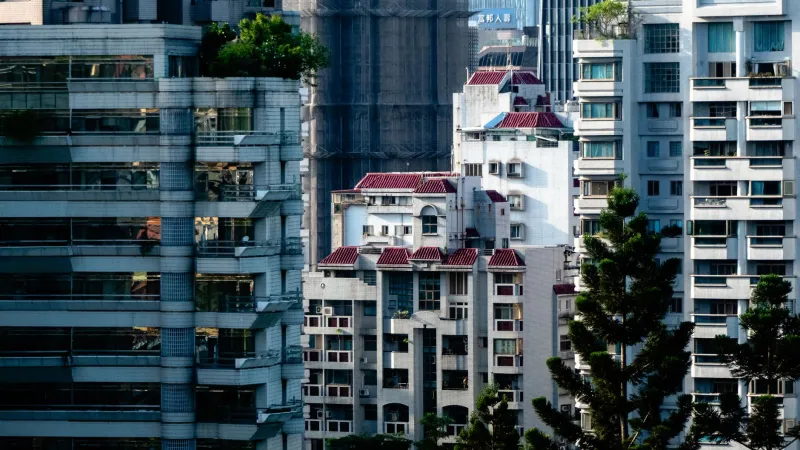
There is a particular kind of disappointment reserved for buildings that were once celebrated as benchmarks of urban sophistication and are now quietly losing ground to newer competition. Not through neglect, not through physical deterioration, but through something subtler and, in many respects, more damaging: relevance erosion. Across major American cities—from Chicago's Near North Side to the Midtown corridors of Atlanta and the South of Market district in San Francisco—residential towers completed between 2008 and 2015 are increasingly being repositioned, repriced, or extensively renovated to remain competitive. The buildings themselves are structurally sound. What has failed them is the vision that shaped them.
Understanding how this happens—and why it happens faster than the industry has historically anticipated—is essential for anyone with a stake in urban residential real estate, whether as a developer, investor, or prospective resident.
The Acceleration Problem
For most of the twentieth century, residential buildings aged on a relatively predictable schedule. Physical wear, neighborhood drift, and shifting demographics were the primary drivers of value decline, and most properties had a reasonable window—often thirty years or more—before requiring substantial reinvestment. That timeline has compressed dramatically.
The convergence of three distinct forces has accelerated the obsolescence cycle in ways the industry was poorly prepared to absorb. First, remote and hybrid work arrangements have fundamentally altered what residents expect from their living spaces. A unit designed in 2010 with a single dedicated bedroom and an open-plan living area made reasonable assumptions about how its occupants would spend their days. Those assumptions no longer hold for a substantial portion of the urban residential market. The absence of a dedicated home office, adequate acoustic separation, or sufficient electrical capacity for multiple simultaneous workstations is no longer a minor inconvenience—it is a dealbreaker for a growing segment of prospective tenants and buyers.
Second, technology integration standards have shifted from amenity to baseline expectation at a pace that has outrun most building infrastructure. In-unit smart home systems, building-wide gigabit connectivity, EV charging infrastructure in parking facilities, and package management systems capable of handling the volume of e-commerce deliveries that contemporary residents generate were either nonexistent or considered premium additions in buildings completed a decade ago. Today, their absence registers as a deficiency rather than a neutral feature. Buildings that cannot accommodate these systems without significant structural intervention face a costly remediation path—or a permanent competitive disadvantage.
Third, lifestyle expectations around wellness, sustainability, and community have evolved in ways that are difficult to retrofit. Air filtration systems, circadian lighting design, dedicated spaces for fitness recovery, and programming infrastructure for resident engagement are not features that can be easily layered onto buildings that were not conceived with them in mind.
Case Studies in Premature Decline
The evidence is not merely theoretical. In several high-profile urban markets, the pattern is visible in the data.
In Washington, D.C., a cluster of luxury rental towers developed in the 2009–2013 period along the NoMa corridor—once celebrated for their modern aesthetic and proximity to transit—have seen concession packages expand significantly over the past three years. Property managers report that prospective residents consistently cite inadequate home office configurations and the absence of reliable high-speed connectivity infrastructure as primary objections. Effective rents in several of these buildings have declined relative to newer nearby competition despite nominal asking rates holding steady.
In Seattle's South Lake Union neighborhood, buildings completed in the early 2010s that were marketed as technology-forward have found themselves in an awkward position: their original technology features, once differentiating, now feel dated compared to purpose-built competitors. Keyless entry systems that were considered innovative in 2012 operate on protocols that are no longer standard. Building management platforms are incompatible with contemporary smart home ecosystems. The cost of full system replacement in occupied buildings is prohibitive, leaving operators to manage the gap with partial solutions that satisfy no one.
In Miami's Brickell district, several mixed-use towers developed before the widespread adoption of electric vehicles face a structural disadvantage: their parking facilities were not engineered to support the electrical load required for widespread EV charging installation. As EV adoption among affluent urban residents accelerates, this limitation is beginning to register in comparative leasing velocity and renewal rates.
The Finish Trap
A significant part of the problem lies in where prior development cycles concentrated their differentiation efforts. The decade between 2005 and 2015 was, in many respects, the era of the finish. Quartz countertops, wide-plank hardwood flooring, European cabinetry, and designer fixture packages became the primary language through which urban luxury was communicated to the market. These elements were visible, photographable, and effective at driving lease-up velocity.
They were also, by their nature, perishable. Finishes trend. What reads as sophisticated in one market cycle can read as dated in the next. More consequentially, heavy investment in finish packages often came at the expense of investment in the structural and systems infrastructure that would have allowed buildings to adapt as requirements changed. A building with extraordinary millwork and inadequate floor-to-ceiling heights for flexible use is a building that has traded long-term resilience for short-term appeal.
Developers who pursued the opposite approach—prioritizing structural generosity, systems infrastructure, and spatial flexibility over premium finishes—have generally found their assets aging more gracefully. Buildings with higher floor-to-ceiling clearances, oversized electrical service, pre-installed conduit pathways for future technology upgrades, and unit layouts that accommodate multiple configurations have demonstrated measurably better retention of competitive position over time.
Designing for Durability
The lesson for contemporary urban development is not to abandon quality of finish—residents reasonably expect thoughtful material selections. The lesson is to sequence investment priorities correctly. Structural and systems decisions made at the design phase are largely irreversible once a building is occupied. Finish packages, by contrast, can be refreshed at reasonable intervals as part of normal capital reinvestment cycles.
Timeless spatial design—generous ceiling heights, logical unit layouts that accommodate multiple lifestyle configurations, robust mechanical and electrical infrastructure, and technology-neutral connectivity pathways—provides the foundation upon which successive generations of finish and technology updates can be applied. Buildings conceived this way do not age out of relevance; they evolve.
Additionally, the integration of adaptable common areas—spaces that can serve as co-working environments, private meeting rooms, or social gathering areas depending on resident demand—provides a buffer against the shifting expectations that have made fixed-purpose amenity spaces so quickly obsolete in previous development cycles.
The Long View
Urban residential real estate has always rewarded patience, but the nature of that patience is changing. The investors and developers who will capture durable value in volatile urban markets are not those who chase the current moment most effectively. They are those who build with enough structural humility to acknowledge that today's premium feature is tomorrow's expected baseline—and that the buildings best positioned for long-term resilience are those designed, from the foundation upward, to accommodate a future that cannot yet be fully anticipated.
The obsolescence trap is not inevitable. It is a product of choices made early in the development process, when the pressure to differentiate in a competitive lease-up environment can obscure the longer calculus of asset durability. Recognizing that pressure—and resisting it where it leads toward shortsighted decisions—is among the most consequential acts of discipline available to serious urban developers.