The Ownership Gap: How Rising Urban Rents Are Locking a Generation Out of the Wealth They Help Create

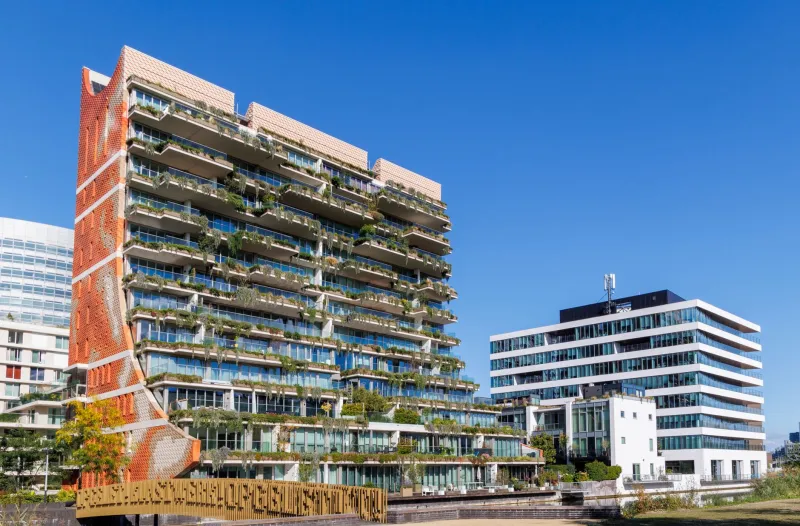
Photo by Photo by Hanna Lazar on Unsplash on Unsplash
Spend any time in the leasing offices of urban residential buildings across the United States and a particular portrait emerges with striking consistency. The prospective residents touring units in cities like Austin, Denver, Boston, and Washington, D.C., are frequently well-educated, professionally employed, and earning incomes that, by most historical measures, should position them comfortably on the path to homeownership. Yet they are renting—often indefinitely—not by preference but by arithmetic.
The numbers behind this phenomenon are by now familiar, though their cumulative weight remains staggering. Median rents in major US metros have increased by more than 30 percent over the past five years in many markets, according to data from the Harvard Joint Center for Housing Studies. Meanwhile, home prices in those same markets have appreciated at rates that consistently outpace wage growth. The gap between what urban renters can save and what urban ownership requires has widened into something that increasingly resembles a structural barrier rather than a temporary obstacle.
For millennials and older members of Generation Z—cohorts who delayed homeownership through a combination of student debt burdens, the 2008 financial crisis, and the timing of their entry into the workforce—the consequences extend well beyond housing. Homeownership in the United States remains the primary vehicle through which middle-class families accumulate intergenerational wealth. To be priced out of ownership in a city's productive years is, effectively, to be excluded from one of the country's most reliable wealth-building mechanisms.
What the Data Actually Reveals
The mechanics of the rent trap deserve careful examination, because they are more insidious than they may initially appear. A household earning $95,000 annually in a market like Seattle or Nashville—solidly above the area median income—might pay $2,800 per month for a one-bedroom apartment in a well-located urban building. After taxes, that figure consumes roughly 40 percent of take-home pay. Factor in student loan obligations, transportation, and the ordinary expenses of professional life, and the monthly surplus available for savings is often marginal.
Saving a conventional 20 percent down payment on a median-priced home in those markets—where median prices now frequently exceed $500,000—requires accumulating $100,000 or more. At a savings rate of $500 per month, that represents more than 16 years of disciplined accumulation, during which time home prices will almost certainly continue to appreciate. The target, in other words, is moving faster than the pursuit.
The Federal Reserve's Survey of Consumer Finances underscores the stakes. The median net worth of homeowners in the United States is approximately 40 times that of renters. This is not primarily a function of income differences; it reflects the compounding effect of equity accumulation over time. Every year spent renting rather than owning is, in a meaningful financial sense, a year of foregone wealth creation—a reality that urban housing markets are currently imposing on an entire generation.
Cities Experimenting With New Models
The recognition that conventional homeownership pathways are failing urban residents has prompted a wave of policy and private-sector experimentation across American cities. None of the emerging models represents a comprehensive solution, but collectively they suggest a growing consensus that the binary choice between renting and traditional ownership is neither inevitable nor sufficient.
Shared equity programs, administered through community land trusts and municipal housing authorities, have gained significant traction in cities including Portland, Oregon, and Burlington, Vermont. Under these arrangements, a buyer purchases a home at below-market cost and agrees to share a portion of any appreciation with the administering organization upon resale. The trade-off—reduced upside in exchange for dramatically reduced entry cost—makes ownership accessible to households that would otherwise be excluded. Critically, the model preserves affordability across generations rather than simply subsidizing one transaction.
Rent-to-own platforms, once associated primarily with predatory consumer goods schemes, have been reimagined by a new cohort of financial technology companies targeting urban renters. Firms such as Divvy Homes and Verbhouse structure agreements in which a portion of monthly rent payments is credited toward an eventual purchase, allowing residents to build equity while occupying a property—effectively converting the rent payment into a form of forced savings. The model remains nascent and carries its own risks, but it addresses a genuine behavioral obstacle: the difficulty of accumulating a lump-sum down payment while simultaneously meeting monthly housing costs.
Developer-backed first-time buyer initiatives represent perhaps the most direct intersection between the private residential development sector and the ownership gap. A small but growing number of urban developers have introduced programs that offer qualified residents of their rental properties preferential access to for-sale units within the same portfolio—along with down payment assistance, reduced closing cost structures, or shared appreciation arrangements. The logic is partly philanthropic and partly strategic: developers who help residents transition to ownership cultivate long-term relationships with communities rather than purely transactional ones.
The Deeper Question Cities Must Answer
Beyond the mechanics of specific programs lies a more fundamental question about urban planning priorities. American cities have, over the past two decades, invested heavily in the infrastructure of rental living—transit-oriented development, mixed-use zoning, the proliferation of amenity-rich apartment buildings—while doing comparatively little to ensure that the residents who populate these environments have a viable path to permanent stake-holding.
The consequences of designing cities primarily for transience are not merely economic. Research in urban sociology consistently demonstrates that homeowners exhibit higher rates of civic participation, neighborhood investment, and long-term community engagement than renters—not because of any intrinsic difference in character, but because ownership creates the conditions for genuine rootedness. A resident who expects to remain in a neighborhood for decades behaves differently than one who anticipates moving within two years. Cities that systematically produce the latter at the expense of the former are, in a meaningful sense, undermining their own social foundations.
This is not an argument against rental housing, which serves essential functions in any healthy urban market and which many residents prefer on its merits. It is, rather, an argument for intentionality: for urban policy, zoning practice, and private development strategy to actively preserve the possibility of ownership for those who seek it, rather than permitting market forces to make that possibility theoretical.
A Responsibility Shared Across the Industry
For developers and property managers operating in urban residential markets, the ownership gap is not a distant policy concern. It is a present reality that shapes the communities surrounding their properties, the long-term health of their markets, and the character of the neighborhoods their buildings inhabit.
Developers who engage seriously with this challenge—through inclusionary ownership programs, partnerships with community land trusts, or transparent advocacy for zoning reform—position themselves not merely as housing providers but as active participants in the economic life of their cities. That positioning carries genuine value, both reputationally and in the depth of community relationships it cultivates.
The alternative—continuing to build for a market that effectively excludes the residents most essential to urban vitality—is a short-term strategy with long-term costs. Cities thrive when the people who animate them can afford to stay, to invest, and to build something that endures. The ownership gap is a threat to that possibility. Addressing it is, ultimately, in everyone's interest.