The Rise of the Micro-District: How Hyperlocal Urban Pockets Are Redefining Property Value
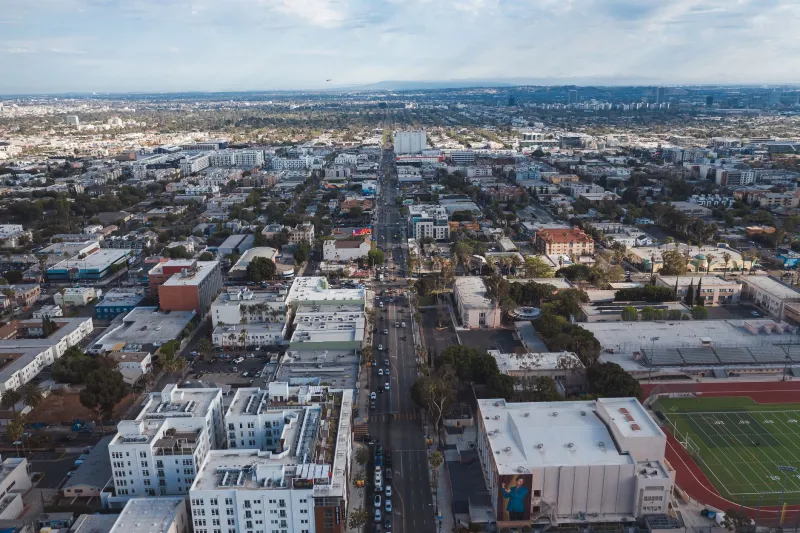
For much of American real estate history, the neighborhood has served as the fundamental unit of urban value. Buyers sought homes in desirable neighborhoods. Investors tracked neighborhood appreciation rates. Lenders assessed neighborhood risk profiles. The logic was intuitive: geography clusters amenities, demographics, and infrastructure in ways that tend to be self-reinforcing over time.
But the neighborhood, as a unit of analysis, is becoming increasingly imprecise. In the most dynamic American cities, the meaningful variation in property values, resident profiles, and growth trajectories is no longer occurring at the neighborhood level. It is occurring at a far smaller scale—one that demands a more granular vocabulary and a sharper analytical lens.
The concept gaining traction among urban planners, institutional investors, and forward-looking buyers is the micro-district: a defined pocket of urban geography, often spanning no more than several blocks, that develops a distinct identity and economic momentum anchored by a specific set of catalysts.
What Creates a Micro-District
Micro-districts do not emerge by accident, and they are not simply the product of organic neighborhood change. They tend to crystallize around one or more identifiable anchors that generate consistent foot traffic, economic activity, and community identity.
Transit infrastructure is among the most powerful of these anchors. The areas within a quarter-mile radius of a newly opened light rail station or bus rapid transit stop in cities like Houston, Minneapolis, and Denver have demonstrated appreciation patterns that diverge sharply from surrounding blocks even within the same named neighborhood. The station area develops its own micro-economy—coffee shops, dry cleaners, fitness studios, and restaurants oriented toward the commuter rhythm—and with it, a distinct residential premium.
Cultural and institutional anchors operate similarly. A new performing arts venue, a flagship museum expansion, or the relocation of a university satellite campus can catalyze micro-district formation with remarkable speed. The effect is not merely foot traffic; it is identity. Residents and businesses alike are drawn to the sense of place that institutional anchors create, and that sense of place translates into durable demand.
Food and beverage clusters—what urban economists sometimes call "restaurant rows"—have also proven to be reliable micro-district precursors. When a critical mass of independent dining establishments concentrates on a particular stretch of blocks, it signals a broader shift in neighborhood character that frequently precedes residential investment and price appreciation.
Case Studies in Micro-District Formation
The Beltline Corridors, Atlanta: Atlanta's BeltLine trail system has generated perhaps the most studied example of micro-district formation in recent American urban history. Rather than lifting the entirety of surrounding neighborhoods uniformly, the BeltLine has created distinct pockets of intensive appreciation at the points where the trail intersects with existing commercial nodes and transit access. Properties within close proximity to these intersection points have appreciated at rates substantially exceeding those of adjacent blocks that are nominally within the same neighborhood.
The Innovation District, Boston: Boston's Seaport and Innovation District transformation illustrates how institutional anchors—in this case, a concentration of technology and life sciences employers—can generate micro-district dynamics within a broader area undergoing change. The blocks most proximate to major employer campuses and the transit connections serving them have developed price and demand profiles that diverge meaningfully from the surrounding district.
The Arts District Adjacencies, Los Angeles: In Los Angeles, the appreciation story of the Arts District has been well documented. Less discussed is how the micro-district effect has propagated outward in a non-uniform pattern, with specific blocks along key corridors capturing disproportionate value relative to nearby streets that lack the same density of cultural programming or walkable amenity access.
The 606 Trail Neighborhoods, Chicago: Chicago's 606 elevated trail offers a compelling parallel to Atlanta's BeltLine experience. The micro-districts that have emerged at the trail's most accessible entry points—where pedestrian infrastructure, transit access, and existing commercial fabric converge—have outperformed broader neighborhood trends in ways that reward investors who identified the pattern early.
How Sophisticated Buyers Are Reading the Signals
The analytical challenge of micro-district investing lies in identifying formation before it is fully priced into the market. By the time a micro-district is broadly recognized and covered in mainstream real estate media, much of the appreciation opportunity has typically already materialized.
Savvy buyers and investors have developed a set of leading indicators they monitor systematically. Permit filings for food and beverage establishments are among the earliest signals—restaurant operators, who depend on foot traffic for their survival, tend to locate themselves ahead of the residential curve rather than behind it. The arrival of specialty coffee roasters and independent bookstores has proven to be a particularly reliable precursor in multiple markets.
Transit capital allocation is another critical input. Tracking where metropolitan transit authorities are directing infrastructure investment—new stations, enhanced bus service, protected cycling infrastructure—provides a window into where micro-district formation is most likely to accelerate over the coming three to seven years. This is long-horizon analysis, but for buyers with appropriate time frames, it is among the most reliable available.
Institutional real estate investment patterns also warrant attention. When well-capitalized developers and REITs begin acquiring land in a specific pocket of a city, they are typically acting on proprietary analysis that retail buyers can partially reverse-engineer by tracking public permit and transaction records.
The Risk Dimension
Micro-district formation is not without risk, and intellectual honesty requires acknowledging it. Not every emerging pocket reaches critical mass. Anchors can fail—restaurants close, employers relocate, transit projects are delayed or defunded. The same hyperlocal concentration of value that creates opportunity on the upside can amplify losses when the thesis does not materialize.
Displacement dynamics also merit consideration. As micro-districts appreciate, the communities that preceded them are frequently subject to significant economic pressure. This is not merely an ethical observation; it is a market risk factor. Political and regulatory responses to displacement—rent stabilization measures, inclusionary zoning requirements, development moratoria—can materially affect the economics of micro-district investment.
A New Vocabulary for Urban Value
The practical implication of the micro-district framework is a shift in how urban real estate should be evaluated. Neighborhood-level analysis remains useful as context, but it is insufficient as a primary lens. The questions that matter most are increasingly granular: Which specific blocks have direct access to the anchor? Where does pedestrian infrastructure create natural gathering points? Which streets sit within the radius that transit riders will walk without hesitation?
At West City by Vajra, our approach to urban development is rooted in precisely this kind of granular analysis. The projects we bring to market are sited not simply within desirable neighborhoods, but within the specific micro-geographies where the convergence of infrastructure, culture, and community creates the conditions for enduring residential value. In an urban real estate landscape defined by increasing complexity, that level of precision is not optional. It is essential.