Walking Distance to Everything: How the 15-Minute City Concept Is Rewriting American Urban Real Estate
A New Metric for Urban Desirability
For decades, the American residential ideal was defined by square footage, school district ratings, and highway access. That calculus is changing. Across major metropolitan areas—from Denver's River North corridor to the Midtown neighborhoods of Atlanta and the emerging mixed-use districts of Austin—a different set of priorities is taking hold. Today's urban dwellers are increasingly asking a single, deceptively simple question: What can I reach on foot?
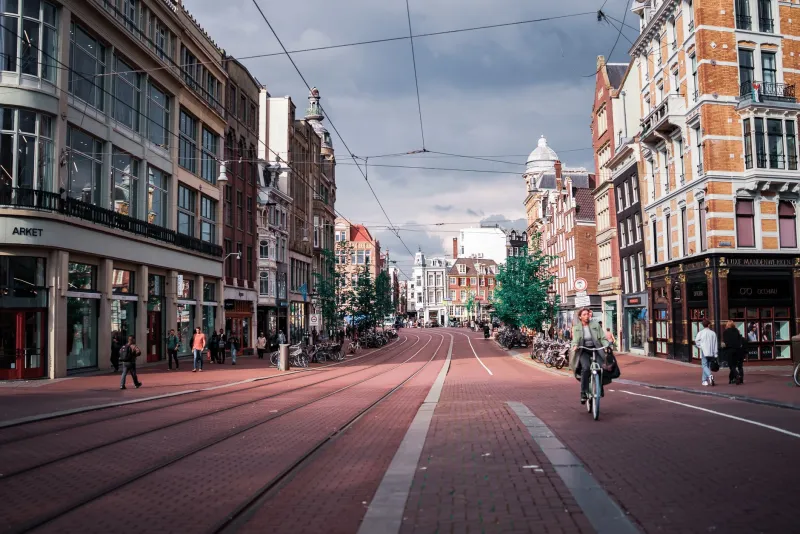
The 15-minute neighborhood concept, first popularized by French-Colombian urbanist Carlos Moreno and subsequently adopted as municipal policy in cities from Paris to Portland, posits that a well-designed urban environment should place residents within a 15-minute walk or bicycle ride of work, groceries, healthcare, education, parks, and cultural amenities. While European cities have long been structured around this principle, American developers are now engineering it deliberately—and buyers are responding with their wallets.
From Theory to Concrete Block Plans
What does a 15-minute neighborhood actually look like when it is built from the ground up, or thoughtfully retrofitted into an existing urban fabric? The answer varies by city, but several consistent design principles have emerged across successful projects.
Ground-floor retail activation is foundational. Residential towers and mid-rise buildings that incorporate grocery anchors, pharmacies, coffee shops, and fitness studios at street level create the daily-use density that makes a neighborhood self-sufficient. Mixed-income housing layered above commercial space ensures that the community serves a broad population rather than becoming an enclave accessible only to high earners.
In Minneapolis, the North Loop neighborhood offers a compelling case study. Once a warehouse district on the edge of downtown, North Loop has been methodically transformed into a compact, walkable community featuring independent restaurants, design studios, fitness concepts, and a growing residential population. Residents can access the Mississippi riverfront trails, Target Field, and a dense cluster of coffee shops and coworking spaces without once starting a car. Average residential sale prices in North Loop have appreciated significantly faster than the broader Minneapolis metro, a pattern that researchers at the University of Minnesota's Center for Transportation Studies have documented in connection with walkability improvements.
Similarly, in Washington, D.C., the Shaw and Columbia Heights neighborhoods illustrate how transit investment, zoning flexibility, and deliberate mixed-use development combine to create the conditions for 15-minute living. Residents cite the ability to commute by Metro, walk to farmers markets, and access medical offices and gyms within minutes as central to their quality of life—and their willingness to pay a premium for that access.
The Real Estate Premium on Proximity
The financial argument for walkable urban development has grown increasingly difficult to dismiss. Research from Smart Growth America has consistently found that walkable urban places command measurable price premiums over car-dependent alternatives. A 2023 analysis of residential transactions across 30 major U.S. metros found that properties in high-walkability ZIP codes sold at a per-square-foot premium of between 12 and 24 percent compared to low-walkability equivalents—a gap that has widened over the past decade.
For developers, this premium creates a compelling incentive to invest in the infrastructure of walkability: wide sidewalks, protected bike lanes, ground-floor retail leasing strategies that prioritize service tenants over storage or parking uses, and partnerships with transit agencies to improve last-mile connectivity. The upfront costs are real, but the long-term asset value—and the ability to attract and retain residents who are willing to pay for convenience—more than justifies the investment.
At West City by Vajra, the commitment to elevated urban living is grounded in precisely this understanding. Properties are conceived not merely as residential units but as integrated components of a living neighborhood ecosystem. The question is never simply how many bedrooms a floor plan contains, but rather what life looks like when a resident steps outside the front door.
The Grocery Store as Anchor, the Park as Amenity
One of the more nuanced insights from 15-minute neighborhood research is the outsized importance of grocery access. Studies from the Urban Land Institute have repeatedly identified proximity to a full-service grocery store as one of the strongest predictors of residential satisfaction and long-term neighborhood stability. A neighborhood that checks every other box—vibrant dining, transit access, cultural institutions—but lacks convenient grocery shopping will struggle to retain families and older residents.
This is why thoughtful developers treat grocery anchors as strategic assets, not afterthoughts. When a high-quality grocer commits to a ground-floor space in a new mixed-use building, it signals permanence and daily-use vitality to prospective residents. It also tends to catalyze surrounding retail, as foot traffic generated by grocery shopping supports adjacent cafes, dry cleaners, and specialty stores.
Parks and green space play a complementary role. Access to a well-maintained urban park within a five-minute walk has been shown to reduce resident stress, improve mental health outcomes, and increase willingness to pay for nearby housing. Cities like Chicago, with its extensive lakefront trail system, and Denver, with its network of creek-side greenways, have benefited enormously from the real estate premium that green access generates.
Challenges and the Road Ahead
The 15-minute model is not without its tensions. As walkable neighborhoods attract investment and appreciation, the risk of displacement for lower-income residents intensifies. Genuine 15-minute neighborhoods must grapple seriously with affordability, ensuring that the benefits of proximity are not reserved exclusively for those with the financial means to access them. Inclusionary zoning, community land trusts, and deliberate affordable unit mandates are among the policy tools that cities are deploying with varying degrees of success.
There is also the practical challenge of retrofitting car-centric suburban and urban environments that were designed around automobile dependence. Widening sidewalks, adding protected bike infrastructure, and rezoning for mixed use requires sustained political will and community engagement—neither of which can be taken for granted.
Yet the trajectory is clear. As remote and hybrid work patterns reduce the centrality of the daily commute, and as younger Americans increasingly prioritize lifestyle access over raw square footage, the 15-minute neighborhood is transitioning from an aspirational concept to a baseline expectation for a growing segment of the urban market. Developers who understand this shift—and who build accordingly—are not simply responding to a trend. They are shaping the future of American urban life.