Character Over Curated: Why Authentic Urban Neighborhoods Are Outperforming the Developer's Vision of Community
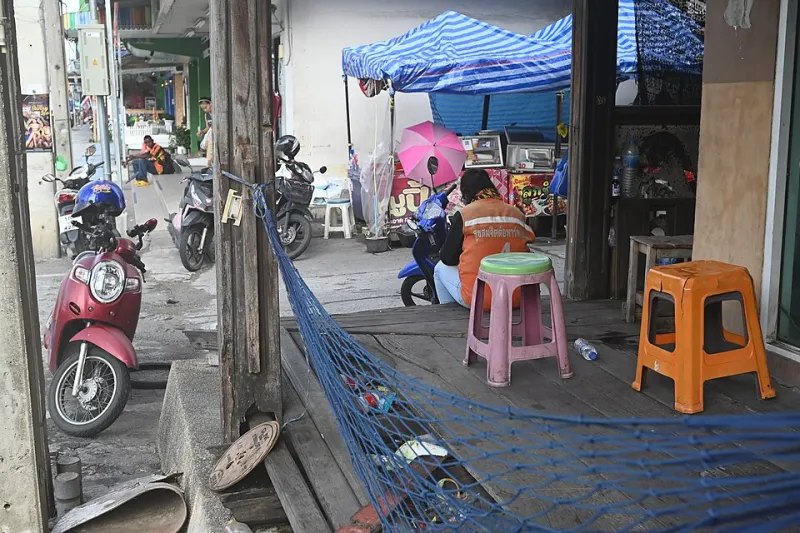
Photo: PattayaPatrol, CC BY-SA 4.0, via Wikimedia Commons
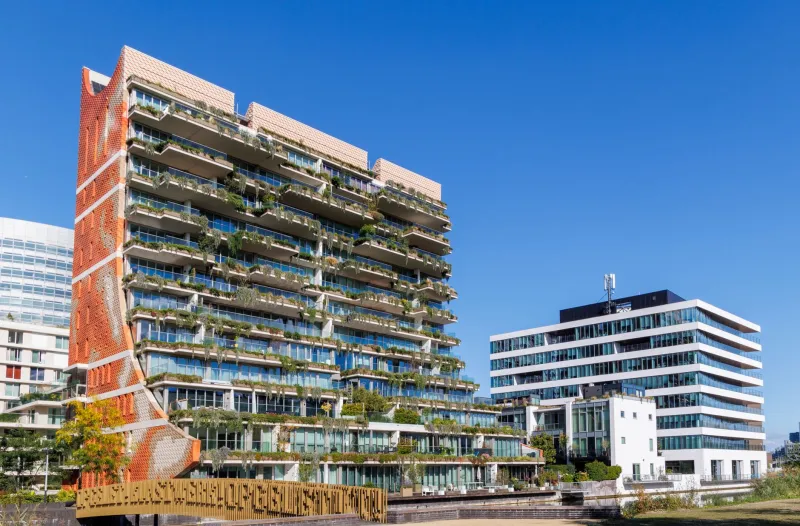
There is a particular kind of mixed-use development that has become instantly recognizable to anyone who spends time in American cities. The ground floor features a coffee concept with exposed Edison bulbs and a pour-over menu. Adjacent to it sits a fast-casual Mediterranean restaurant, a boutique fitness studio, and a retail space occupied by a national athleisure brand. Above it all, residential units with quartz countertops and Juliet balconies look out over a street that, six years ago, was a parking lot.
This formula is not accidental. It represents a significant capital investment in the simulation of urban vitality. And it is increasingly failing to satisfy the people it was designed to attract.
The Homogenization Problem
Urban sociologists have been documenting the phenomenon of retail and residential homogenization for years, but the market consequences of that homogenization are now becoming legible in ways that matter to developers, investors, and prospective residents alike. When every new mixed-use development in a given metro area offers the same curated roster of tenants and the same architectural vocabulary of reclaimed wood and industrial steel, the concept of neighborhood distinctiveness—the quality that originally made urban living desirable—is eroded from the inside.
The irony is precise and worth sitting with: the investment strategies intended to capture the appeal of authentic urban neighborhoods are systematically destroying the conditions that made those neighborhoods appealing in the first place.
This is not a new observation. What is new is the degree to which it is showing up in leasing data, resident satisfaction surveys, and long-term appreciation metrics across major U.S. markets.
What Younger Urbanites Are Actually Choosing
Millennials and Gen Z renters and buyers—the demographic cohorts that urban residential development has most aggressively courted over the past fifteen years—are demonstrating a clear and measurable preference for neighborhoods with what researchers call "social depth." This refers not to the presence of amenities, but to the presence of history: businesses that have survived multiple economic cycles, residents who have occupied their homes for decades, public spaces that have been shaped by use rather than designed for photography.
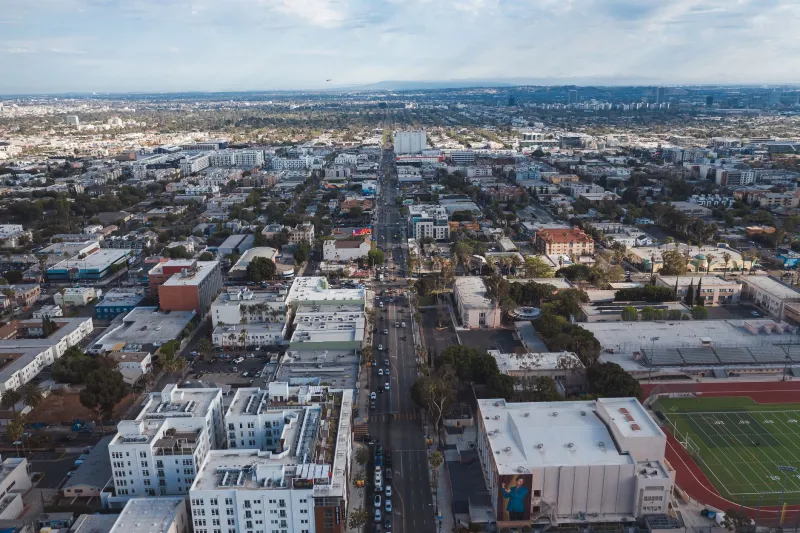
In practical terms, this means that neighborhoods like Logan Square in Chicago, Frogtown in Los Angeles, Olneyville in Providence, and the Upper Ninth Ward in New Orleans are attracting sustained residential interest from younger urban professionals—not despite their rougher edges and incomplete gentrification, but in significant part because of the community fabric those edges preserve.
A 2023 analysis of residential property appreciation in twelve major U.S. cities found that neighborhoods with high concentrations of independently owned businesses—a reliable proxy for organic neighborhood development—consistently outperformed comparable areas dominated by chain retail and developer-placed tenants over ten-year holding periods. The premium was not marginal. In several markets, it exceeded fifteen percentage points of cumulative appreciation.
The Limits of Manufactured Place
Developer-created "urban experiences" operate on a specific theory of value creation: that the aggregation of desirable amenities within a single development or district will generate the kind of foot traffic and community energy that translates into residential demand. This theory is not entirely wrong. But it contains a structural limitation that is becoming harder to ignore.
Manufactured place is static. It reflects the preferences and assumptions of the development team at the moment of conception, and it ages in a particular way—not organically, as neighborhoods do, but as a product does. The food hall that was innovative in 2018 is unremarkable in 2025. The rooftop bar that differentiated a building at lease-up becomes a maintenance liability and a noise complaint vector within five years. The curated retail tenants, operating on favorable introductory lease terms, cycle out when those terms expire, leaving ground-floor vacancies that are difficult to fill at market rates.
Authentic neighborhoods do not have this problem in the same way. They evolve. The independent restaurant that opened in a converted garage becomes an institution. The community garden that residents organized informally becomes a focal point for social infrastructure. The neighborhood association that formed to oppose an unwanted development becomes a vehicle for genuine civic participation. These are not amenities. They are the conditions of real community, and they cannot be installed by a developer on a project timeline.
The Authenticity Premium in Practice
Real estate professionals working in markets where organic and developer-created neighborhoods exist in close proximity are observing a consistent pattern. Properties in organically developed areas—even those with older housing stock, less polished common areas, and fewer branded amenities—are commanding competitive prices and demonstrating stronger long-term demand among residents who have the financial means to choose between the two.
More telling still is the data on residential tenure. Turnover rates in developer-curated mixed-use developments tend to run higher than in established organic neighborhoods, even when controlling for unit size and price point. Residents who select a building for its amenity package are, it appears, also more likely to leave when a building with a superior amenity package opens nearby. Residents who select a neighborhood for its character and community tend to stay—and their stability is itself a value-generating force, contributing to the social continuity that makes a neighborhood worth living in.
A Different Kind of Development Ambition
None of this suggests that new development has no role to play in urban neighborhoods. It suggests, rather, that the most durable developments are those designed to integrate into an existing community fabric rather than replace it. This requires a different kind of ambition—one less focused on the creation of a complete, self-contained environment and more focused on the quality of connection between a building and its surrounding neighborhood.
Developers who preserve ground-floor space for independent operators rather than national tenants, who design buildings with permeable edges that encourage interaction with the street, who engage existing residents in the planning process rather than treating community input as a regulatory obstacle—these are the developers whose projects tend to hold value and generate satisfaction over time. They are also, not coincidentally, the developers whose work tends to be welcomed rather than resisted by the communities in which they build.
At West City by Vajra, this is the distinction we consider fundamental. Urban development at its best does not manufacture a neighborhood. It earns a place within one. The difference between those two orientations is increasingly visible in the numbers—and it is, we would argue, the most important question any prospective urban resident can ask of the building they are considering calling home.