Invested Without Deed: The Hidden Stakes of Long-Term Urban Renting
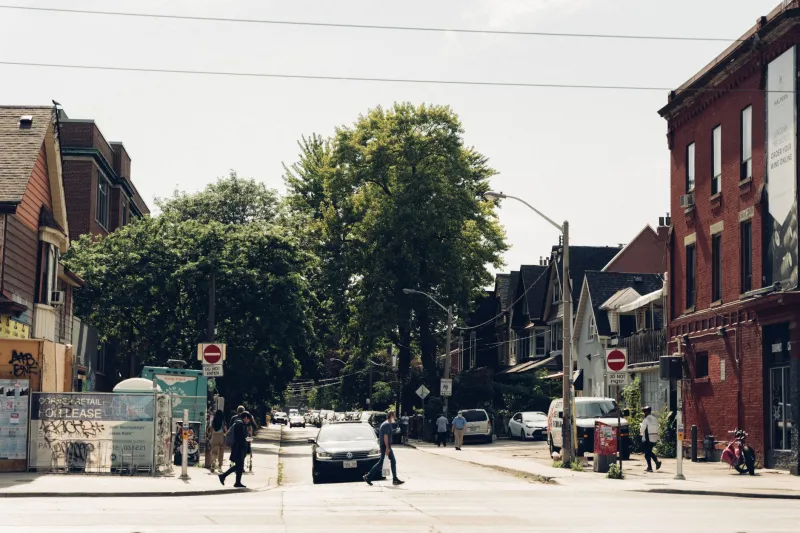
There is a particular kind of grief that arrives without warning — often on the day a lease renewal notice doesn't come, or when a beloved coffee shop shutters because the building sold and rents tripled overnight. For millions of long-term urban renters across the United States, this grief is not metaphorical. It is the measurable consequence of investing deeply in a place they were never permitted to own.
The conventional real estate narrative positions renting as a transitional state — a waiting room before the real commitment of homeownership begins. Yet the data, and more importantly the lived experience of American city dwellers, tells a more complicated story. Long-term renters in cities like Chicago, Seattle, Denver, and Washington, D.C., are not passive occupants. They are, in nearly every meaningful sense except the legal one, stakeholders.
The Architecture of Invisible Investment
Consider what a renter actually contributes over five, ten, or fifteen years in a single urban neighborhood. They become the regulars who sustain local businesses through slow seasons. They join neighborhood associations, attend zoning hearings, and advocate for crosswalks and park improvements. They mentor neighbors' children, organize building composting programs, and quietly absorb the institutional knowledge of a block — who to call when the streetlight is out, which landlord responds and which doesn't, when the farmers market starts and ends.
None of this appears on a financial statement. None of it accrues to a personal net worth. And yet, remove these residents from a neighborhood, and something irreplaceable departs with them.
Economists sometimes refer to this as "social capital" — the networks, norms, and trust that enable communities to function efficiently and humanely. Urban renters generate it in abundance. The irony is that the very appreciation in property values they help create often becomes the mechanism of their displacement.
The Psychological Contract No One Signs
When a household rents an apartment in a particular neighborhood, they enter into something that functions, emotionally at least, like a contract. They commit to a place. They arrange their routines around it. They form attachments to specific streets, specific light at specific hours, specific sounds that become the texture of ordinary life.
Psychologists studying place attachment — the emotional bonds humans form with physical environments — have found that these connections are not superficial. They are deeply tied to identity, to a sense of continuity, and to psychological wellbeing. For urban renters, place attachment frequently operates at the neighborhood scale rather than the unit scale. The apartment may change; the neighborhood is the anchor.
This creates what might be called a psychological contract between renter and city: an implicit promise that sustained investment in a community will be met with some reasonable degree of stability and belonging. When that contract is broken — through rapid rent increases, redevelopment, or the gradual erasure of the commercial and social fabric that made a neighborhood livable — the psychological cost is significant and largely unacknowledged.
Researchers studying displacement anxiety have documented elevated stress, social withdrawal, and diminished civic participation among renters in neighborhoods undergoing rapid change. These are not soft findings. They represent real costs, borne privately, that never appear in a developer's pro forma.
When Transactional Logic Meets Relational Reality
The dominant framework of American real estate is transactional. Properties are assets. Rents are yields. Tenants are revenue sources. Within this logic, there is nothing inherently wrong with raising rents to market rate, converting rental units to condominiums, or selling a building to a buyer with different intentions for the space. Each of these decisions is legally sound.
But transactional logic, applied without restraint to what are fundamentally relational spaces, produces outcomes that undermine the very value it seeks to capture. A neighborhood's desirability — the quality that justifies premium rents in the first place — is not a natural resource that exists independently of the people who inhabit it. It is continuously produced by those residents through their choices, their presence, and their investment of time and energy.
When long-term renters are displaced, the community infrastructure they built does not automatically transfer to new residents. It erodes. Businesses that depended on regulars lose their base. Civic organizations lose their institutional memory. The informal networks of mutual aid and social trust that make dense urban living not merely tolerable but genuinely enriching — these require years to develop and can dissolve with surprising speed.
This is the hidden cost that rarely enters the conversation: displacement does not simply move people. It destroys accumulated social value that took years, sometimes decades, to build.
Rethinking the Relationship Between Tenure and Belonging
None of this is an argument against property ownership, against market-rate development, or against the legitimate financial interests of building owners and investors. Urban real estate development, done thoughtfully, creates housing supply, improves building quality, and contributes to the fiscal health of cities. These are genuine goods.
What it is an argument for is a more honest accounting of what urban communities actually require to thrive — and a more serious engagement with the residents who make them worth inhabiting in the first place.
Some cities are beginning to experiment with instruments that acknowledge the relational stakes of long-term renting: community land trusts, right-to-return policies, tenant opportunity-to-purchase legislation, and anti-displacement funds tied to new development approvals. These mechanisms are imperfect and politically contested. But they reflect a growing recognition that the binary of owner versus renter obscures a more nuanced reality.
Long-term renters have stakes in their communities. Those stakes are real, even if they are not recorded in any title registry.
What Developers and Property Managers Owe the Conversation
For developers and property managers who are serious about building urban communities — not merely urban inventory — this dynamic carries practical implications. Resident retention is not simply an occupancy metric. It is a community-building strategy. Long-term residents stabilize the social environment that attracts subsequent residents. They reduce turnover costs. They generate the authentic neighborhood identity that no amount of curated amenity programming can manufacture.
Buildings and developments that invest in genuine resident relationships — through transparent communication, responsive management, and a demonstrated commitment to the people who live there — are not simply being altruistic. They are protecting and cultivating the community value that underlies their asset value.
The city, at its best, is a place where belonging is possible without a deed. The question for every stakeholder in urban real estate — investor, developer, manager, and resident alike — is whether the structures we build and the practices we adopt make that kind of belonging more or less possible.
That answer shapes not just individual communities, but the long-term vitality of American urban life itself.