The Eight-to-Fifteen Advantage: How Mid-Rise Residential Buildings Are Rewriting Urban Real Estate Economics
The Skyline Bias and Its Costs
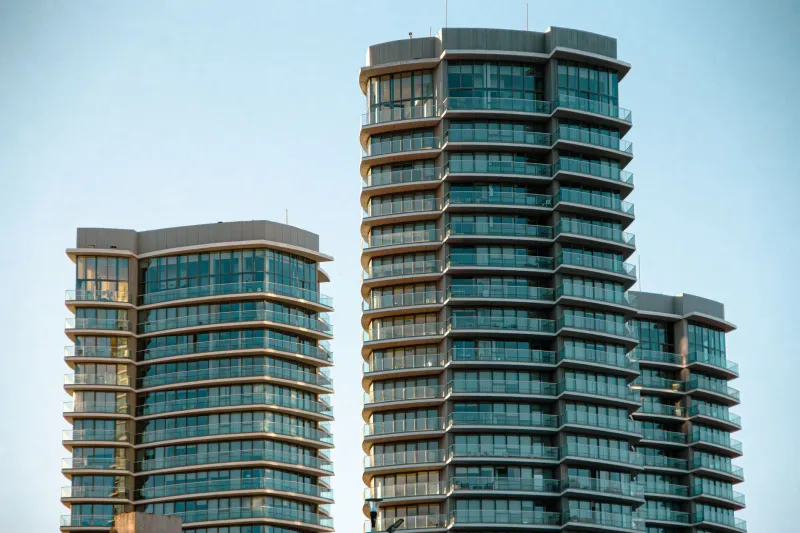
For decades, American urban real estate has operated under an implicit hierarchy: the taller the building, the more prestigious the address, the higher the per-square-foot premium. Developers chased height as a signal of ambition, and investors followed. Glass towers became the dominant visual grammar of urban aspiration from Chicago's Streeterville to Manhattan's Hudson Yards to Miami's Brickell corridor.
But a closer examination of residential performance data across major US markets is beginning to challenge that assumption in meaningful ways. Mid-rise buildings—broadly defined as those between eight and fifteen stories—are quietly accumulating a record that their taller neighbors struggle to match. The advantages are not marginal. They span construction economics, operational efficiency, resident retention, and something harder to quantify but increasingly central to urban product differentiation: livability.
The question worth asking is not why mid-rise buildings perform well. The question is why it took the industry so long to notice.
What the Numbers Reveal
Construction cost curves in urban residential development do not rise uniformly with height. Buildings above roughly fifteen stories typically require a structural transition—from wood or light-gauge steel framing to reinforced concrete or steel moment frames—that introduces a significant per-unit cost inflection. Elevator-to-unit ratios also shift at higher floor counts, as code requirements and practical logistics demand more vertical transportation infrastructure. Mechanical systems grow more complex. Wind load engineering becomes a material budget line.
Mid-rise buildings largely avoid these thresholds. They can deliver meaningful density—often 80 to 150 units depending on floorplate and lot configuration—while operating within a construction cost envelope that produces more favorable returns per dollar invested. In markets where land cost is high but not extreme, this efficiency becomes a decisive competitive advantage.
Operationally, the picture is similarly favorable. Mid-rise buildings tend to carry lower common area maintenance costs, simpler HVAC configurations, and reduced elevator maintenance burdens relative to their taller counterparts. These savings translate directly into either improved net operating income for owners or more competitive resident pricing—frequently both.
The Resident Experience Differential
Financial performance tells only part of the story. Resident satisfaction surveys conducted across urban multifamily properties consistently surface a pattern that surprises those who assume height correlates with desirability: mid-rise residents report higher satisfaction scores on dimensions including community atmosphere, building management responsiveness, and day-to-day convenience.
The reasons are structural, both literally and socially. A fifteen-story building with 120 units creates a resident population dense enough to support shared amenities and foster incidental social interaction, but not so large that anonymity becomes the dominant residential experience. Neighbors recognize one another. Building staff can maintain meaningful familiarity with residents. The lobby functions as a social threshold rather than a transit corridor.
Contrast this with a fifty-story tower housing 400 or 500 units. At that scale, the building operates more like a small city than a residential community. Management becomes institutional. Shared spaces are sized for crowds rather than conversations. The elevator—as anyone who has written about vertical social dynamics in urban buildings will recognize—becomes a space of deliberate non-acknowledgment rather than casual exchange.
Mid-rise buildings inhabit a more human scale, and residents respond to that scale in ways that show up in retention rates, lease renewal decisions, and word-of-mouth reputation.
Neighborhood Integration as a Value Driver
Beyond the building itself, mid-rise residential development tends to integrate more successfully into existing urban fabric—a factor that has become increasingly material to property value as American cities mature in their understanding of what makes neighborhoods function well over time.
Tall towers, particularly those occupying full city blocks, can create what urban planners call the "dead zone" effect: stretches of streetscape dominated by loading docks, parking garage entrances, and blank podium facades that offer nothing to pedestrian life. The sheer scale of these projects often precludes the kind of ground-floor activation—retail, restaurant, service, civic—that animates successful urban corridors.
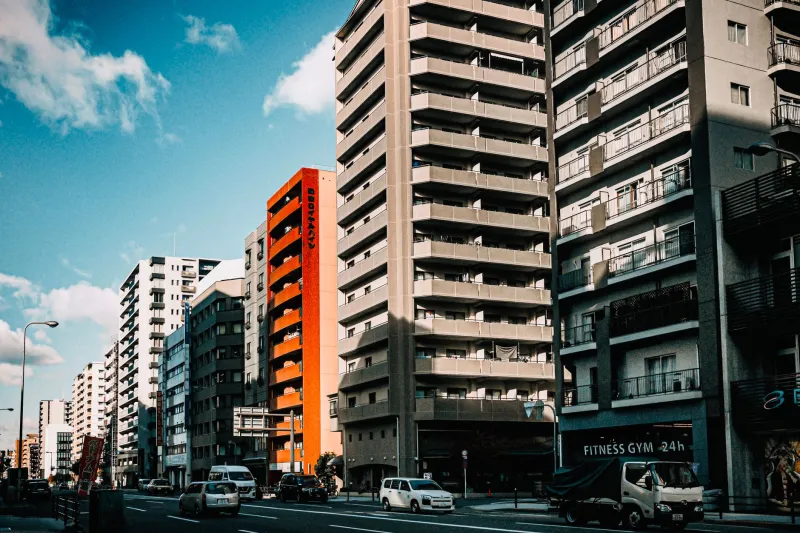
Mid-rise buildings, by contrast, typically occupy smaller footprints and present more manageable street frontages. Developers working at this scale have greater design flexibility to activate ground-floor space, maintain sight lines, and respond to the existing architectural character of surrounding blocks. In neighborhoods where historic preservation is a consideration—think Brooklyn's Crown Heights, Washington DC's Shaw, or Chicago's Pilsen—mid-rise new construction can coexist with older building stock in ways that tower development simply cannot.
This integration matters economically. Properties embedded in walkable, activated, mixed-use streetscapes consistently command valuation premiums over isolated towers that generate foot traffic only during move-in and move-out windows.
The Investor Recalibration
Institutional capital is beginning to reflect these realities, if not yet loudly. Multifamily investment portfolios that once emphasized trophy towers in gateway markets are showing growing allocations to mid-rise assets in secondary urban cores and established neighborhood submarkets. The reasoning is straightforward: lower basis, more predictable operating costs, stronger resident retention, and reduced exposure to the luxury oversupply dynamics that have pressured rents in many high-rise-heavy markets since 2022.
For private and regional developers, the mid-rise thesis has additional appeal. Projects in this scale range are more financeable in constrained credit environments, more likely to secure community support through local planning processes, and faster to deliver from groundbreaking to certificate of occupancy. In a development landscape where timeline risk has become a primary concern, those advantages compound meaningfully.
Rethinking the Premium
None of this is to suggest that high-rise residential development lacks merit or market. There are urban contexts—extreme land scarcity, specific luxury positioning, iconic architectural commissions—where tower development remains the appropriate and value-maximizing response. The skyline will not empty itself.
But the assumption that height is synonymous with quality, that a penthouse on the forty-second floor is categorically superior to a well-appointed unit on the tenth, deserves serious reconsideration. The evidence accumulating across US urban markets suggests that the mid-rise sweet spot—dense enough to be economically viable, human enough to be genuinely livable, contextual enough to strengthen rather than disrupt its surroundings—may represent the most durable form of urban residential value creation available to developers and investors today.
Elevated urban living, it turns out, does not require maximum elevation. It requires a more precise understanding of what elevation is actually for.