Built to Impress, Ignored in Practice: The Hidden Cost of Amenity-Driven Urban Development
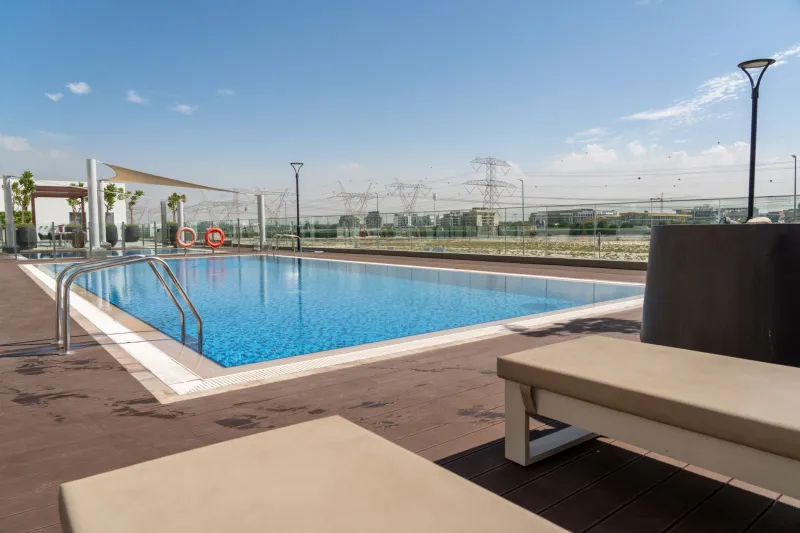
There is a particular kind of quiet that settles over a well-appointed rooftop terrace on a Tuesday afternoon. The furniture is tasteful. The planters are full. The skyline view is exactly as dramatic as the renderings promised. And yet, the space is entirely empty—as it is most days, and most evenings, and most weekends when the weather is anything less than perfect.
This scene repeats itself in luxury and premium residential towers across virtually every major American city. Developers have, over the past decade, engaged in an escalating competition to offer the most visually compelling amenity suites in their markets. The result is a generation of urban buildings that read beautifully in brochures and perform modestly in practice—and where residents quietly absorb the cost of features they never requested and rarely use.
How the Amenity Arms Race Began
The logic behind amenity expansion is not difficult to understand. In competitive urban leasing markets, differentiation is survival. When two comparable buildings sit within blocks of each other, a developer's amenity package becomes a primary lever for attracting qualified tenants during the lease-up period—the critical window that determines whether a project meets its financial projections.
This commercial pressure has produced a fairly predictable set of offerings. Rooftop terraces. Fitness centers with Peloton bikes and mirror workout systems. Co-working lounges with phone booths and standing desks. Pet spas. Demonstration kitchens. Podcast recording studios. Each addition makes sense in isolation, as a response to a perceived market expectation. Collectively, they represent a significant capital expenditure that is ultimately recovered through rent.
According to industry research, amenity construction and ongoing maintenance can account for anywhere from eight to fifteen percent of a building's total operating costs, depending on the market and the scale of the offerings. Those costs are not absorbed by developers as a form of goodwill. They are distributed across the rent roll—meaning every resident pays a proportional share of every amenity, whether or not they ever set foot in the space.
What the Utilization Data Actually Shows
The uncomfortable truth that few developers discuss publicly is that utilization rates for many premium amenities are strikingly low. Internal studies conducted by several large property management firms—some of which have been cited in trade publications without full public disclosure—suggest that rooftop amenity spaces in urban high-rises are actively used by fewer than twenty percent of residents in any given month. Co-working lounges, which surged in popularity during the remote-work boom of the early 2020s, have seen utilization decline sharply as hybrid schedules have stabilized and residents have returned to employer-provided offices or established dedicated home-office routines.
Fitness centers tell a more nuanced story. They rank consistently among the most-used building amenities, yet even here, the relationship between investment and engagement is imperfect. A building that spends heavily on premium cardio equipment and dedicated stretching studios may see no higher utilization than a building with a simpler, well-maintained gym—because proximity and cleanliness matter more to most residents than brand names on the equipment.
The spaces that consistently generate strong, recurring use tend to share certain characteristics: they are easy to access without planning ahead, they serve practical daily needs, and they require no social commitment. A well-lit package room, a clean bike storage facility with a repair station, and a reliable parcel locker system routinely outperform demonstration kitchens and screening rooms in resident satisfaction surveys—at a fraction of the construction and maintenance cost.
The Marketing Logic That Drives Poor Decisions
Understanding why developers continue to build underutilized amenities requires acknowledging the structural incentives at work. Amenity decisions are made during the design and entitlement phase of a project, often two to four years before the first resident moves in. At that stage, the primary audience for those decisions is not future residents—it is lenders, equity partners, and prospective lease-up traffic.
A rooftop terrace with a fire pit and a view photographs extraordinarily well. It performs well in virtual tours. It generates the kind of aspirational imagery that fills social media feeds and drives initial inquiry volume. A superior package management system does none of those things, even if it would improve daily quality of life for every single resident in the building.
This misalignment between the decision-making timeline and the resident experience timeline is at the root of the amenity trap. By the time residents are living with the consequences of those early design choices—paying for a podcast studio they have never entered, or waiting for maintenance on a co-working lounge that serves three people on a busy day—the developers and investors who made those choices have often moved on to the next project.
What Forward-Thinking Developers Are Doing Differently
A growing cohort of urban developers and property managers is beginning to approach amenity programming with more rigor, drawing on post-occupancy evaluation data, resident surveys, and behavioral observation to make decisions that reflect how people actually live rather than how they are imagined to live.
Some firms are deliberately scaling back their amenity footprints in favor of higher-quality execution in a smaller number of spaces. Rather than offering twelve amenity areas with modest budgets for each, they are concentrating investment in four or five spaces that address genuine daily friction points: package handling, bicycle infrastructure, flexible work-from-home support, and outdoor spaces designed for informal, spontaneous use rather than programmed events.
Others are experimenting with amenity programming that evolves after move-in, using resident feedback collected in the first six to twelve months of occupancy to activate or deactivate spaces based on demonstrated demand. This approach requires a more flexible design vocabulary upfront—spaces that can serve multiple functions rather than single-purpose rooms with fixed infrastructure—but it produces a better match between investment and actual resident behavior over time.
There is also a growing recognition that the most valuable amenities a building can offer may not be physical spaces at all. Responsive maintenance, transparent communication, and a management culture that treats residents as long-term stakeholders rather than short-term revenue sources consistently rank at or near the top of resident satisfaction drivers in independent surveys. These are not amenities that can be photographed for a brochure, but they are the factors that drive lease renewals and word-of-mouth referrals—the metrics that actually determine a building's long-term financial health.
Toward a More Honest Calculus
The amenity trap is not inevitable. It is the product of specific incentive structures, specific marketing pressures, and a specific set of assumptions about what urban residents want that have been allowed to persist without adequate scrutiny.
For residents evaluating their next home in a competitive urban market, the lesson is worth internalizing. A building with an impressive amenity list is not necessarily a building that will serve you well. Ask what the utilization rates look like. Ask how maintenance costs are allocated. Ask whether the spaces you are being shown are the spaces residents actually use—or the spaces the marketing team selected for the tour.
For developers willing to engage with that question honestly, the opportunity is significant. In a market where residents are increasingly sophisticated and increasingly aware of the gap between promise and performance, the buildings that earn lasting loyalty will be the ones that chose substance over spectacle—and built accordingly.