Surrounded by Strangers: The Quiet Crisis of Social Disconnection in America's Premium Urban Towers
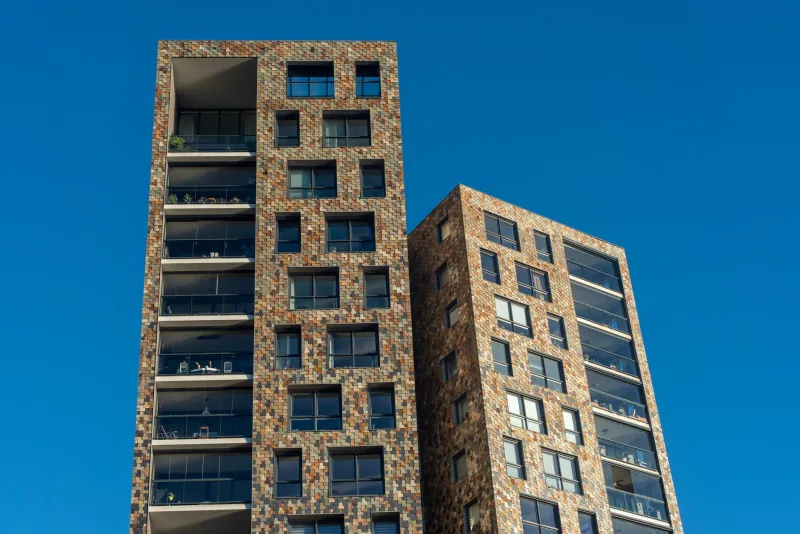
There is a particular irony embedded in the modern urban high-rise: a building that houses five hundred residents can feel more isolating than a rural farmhouse miles from its nearest neighbor. Elevators open onto silent corridors. Lobbies are designed for efficient transit, not lingering. Amenity floors fill with people staring at separate screens. The density that defines city life—the very quality that draws people to urban centers—does not automatically produce community. And increasingly, research suggests it may be producing the opposite.
According to data published by the U.S. Surgeon General's office, loneliness and social isolation affect roughly half of American adults. Urban residents are not exempt from this trend. In fact, several studies indicate that residents of large multifamily buildings report weaker neighborhood bonds than those living in smaller-scale housing arrangements, even when controlling for income and demographic variables. The implication is uncomfortable for the residential development industry: proximity is not the same as connection.
The Architecture of Avoidance
Walk through the common areas of a recently constructed luxury tower in any major American city—Chicago's Fulton Market corridor, Seattle's South Lake Union, or Manhattan's Hudson Yards—and a pattern emerges. Lobbies feature soaring ceilings, polished stone, and curated artwork. They are beautiful. They are also almost entirely devoid of furniture that invites a person to sit and stay.
This is not accidental. For decades, residential developers have optimized common areas around two priorities: aesthetic impression and operational efficiency. The lobby exists to signal quality to prospective renters and to move existing residents through it as quickly as possible. Seating creates loitering. Loitering creates uncertainty. Uncertainty complicates leasing.
The result is architecture that subtly discourages the informal encounters through which human relationships actually form. Sociologists call these "third places"—spaces that are neither home nor workplace, where unplanned social contact can occur. Coffee shops, front stoops, neighborhood bars, and public parks all function this way. Most luxury residential towers have systematically designed third-place potential out of their buildings in favor of clean sightlines and manageable maintenance.
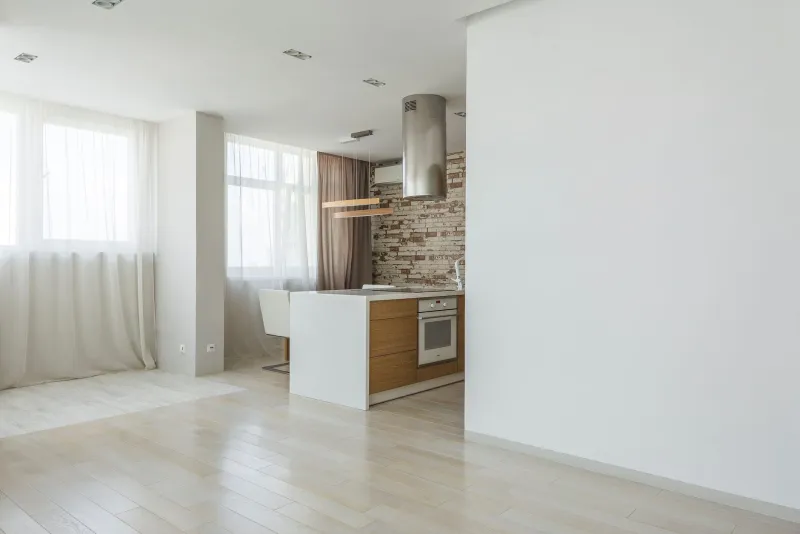
Corridors exemplify the problem most starkly. In the typical high-rise floor plate, residents travel from elevator bank to apartment door along a hallway engineered for nothing beyond passage. There is no reason to pause, no visual anchor to create a moment of shared attention, no alcove where a brief conversation might naturally begin. Neighbors can share a wall for three years without exchanging a single word, and the building itself will have done nothing to make that outcome less likely.
The Transience Factor
Physical design alone does not explain the social fragmentation visible in premium urban buildings. Resident turnover plays an equally significant role—and in high-cost markets, that turnover is substantial.
In cities like San Francisco, Boston, and Washington, D.C., luxury apartment buildings often serve as transitional housing for highly mobile professionals: consultants on extended assignments, relocating executives, young workers who anticipate moving again within two years. These residents are not necessarily uninterested in community; many report genuine desire for social connection. But the calculus of investment changes when a person expects to leave. Forming deep neighborhood relationships requires time, vulnerability, and a degree of commitment that feels irrational when one's lease may not be renewed.
Developers and property managers have, in some cases, responded to this dynamic by programming social events—wine receptions, fitness classes, rooftop gatherings. The intent is sound. The execution frequently falls short. Events that feel corporate-organized, that require residents to interact with strangers in structured and slightly awkward formats, often reinforce rather than dissolve social barriers. Attendance declines after the first few months. The programming budget continues. The loneliness persists.
What Genuine Connection Actually Requires
The distinction between performative community and functional community is worth examining carefully. Genuine social bonds in residential settings tend to emerge from repeated, low-stakes, unplanned contact—not from organized events. The neighbor you see every Tuesday morning waiting for the elevator becomes someone you know. The person you've never encountered outside of a quarterly building party remains a stranger.
This understanding has begun to influence a small but growing number of developers who approach community not as an amenity to be marketed but as an outcome to be designed for. The interventions that appear most effective share several characteristics.
First, they create spaces that reward lingering without requiring it. A well-positioned seating area near the mailroom—a destination every resident visits—creates conditions for spontaneous contact. A coffee station in a lobby alcove does the same. These are not dramatic architectural gestures; they are modest design decisions with meaningful social consequences.
Second, they organize the building's physical layout to increase the probability of repeated neighbor encounters. Some developers have returned to corridor designs that include small widened nodes—essentially micro-lounges—at intervals along the floor plate. Others have experimented with shared kitchen facilities on residential floors, a concept borrowed from co-living models that has proven adaptable to conventional multifamily buildings.
Third, they invest in community management as a sustained operational function rather than a leasing tool. A dedicated community manager whose role is to facilitate organic connection—to know residents by name, to identify shared interests, to create lightweight opportunities for interaction—produces measurably different social outcomes than a leasing agent who organizes one event per quarter.
The Developer's Responsibility
It would be reductive to place the full burden of the loneliness epidemic on residential developers. Social isolation is a complex public health challenge shaped by technology, cultural change, work patterns, and political polarization, among many other forces. No building design eliminates those pressures.
What developers can reasonably be held to account for is whether their buildings actively work against community formation or whether they create genuine conditions for it. The evidence suggests that many premium residential towers, despite their considerable resources and design sophistication, currently do the former.
The commercial incentive to change course exists. Resident retention data consistently shows that people who report strong social connections to their building and neighbors renew leases at significantly higher rates. The financial case for community-oriented design is not merely ethical—it is operational.
For those of us who believe that urban density at its best produces something more than efficient land use—that cities are most valuable when they generate the human contact, creative friction, and mutual recognition that constitute genuine neighborhood life—the current moment represents both a failure and an opportunity. The buildings being designed and built today will shape how millions of Americans experience urban life for decades. Whether those experiences include meaningful connection is, in no small part, a design choice.