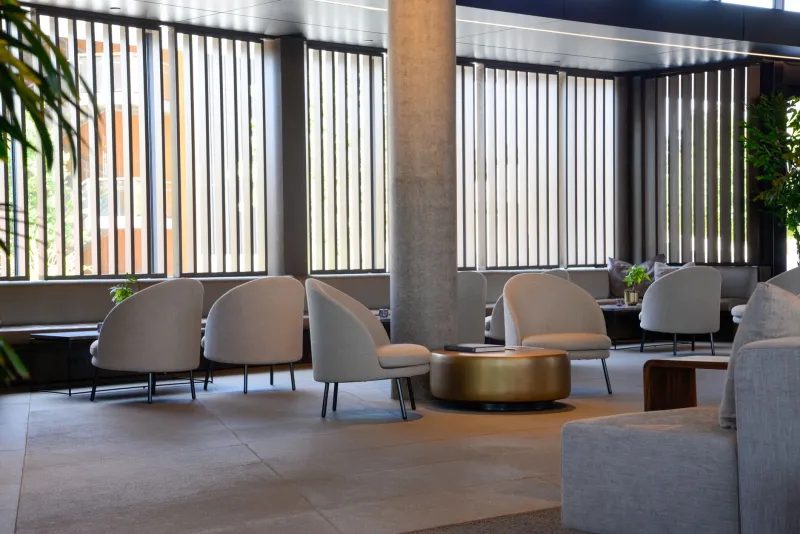
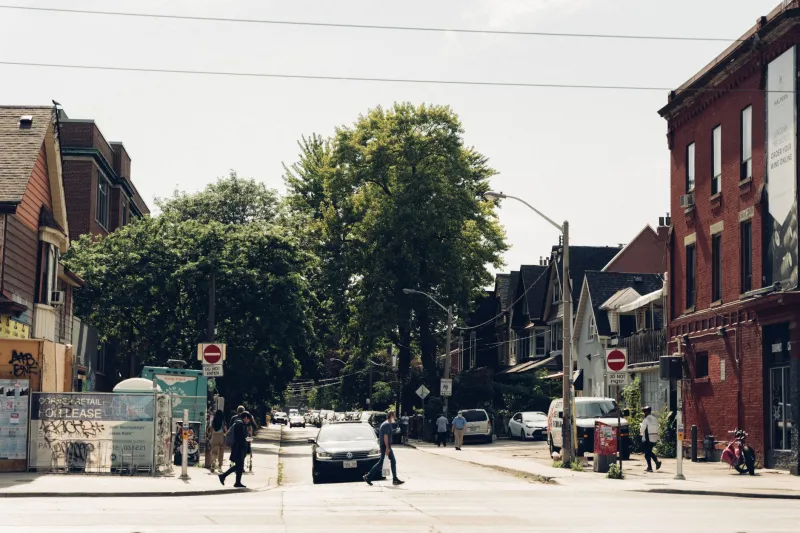
Borrowed Memory: How New Urban Developments Are Wearing the Faces of the Neighborhoods They've Replaced
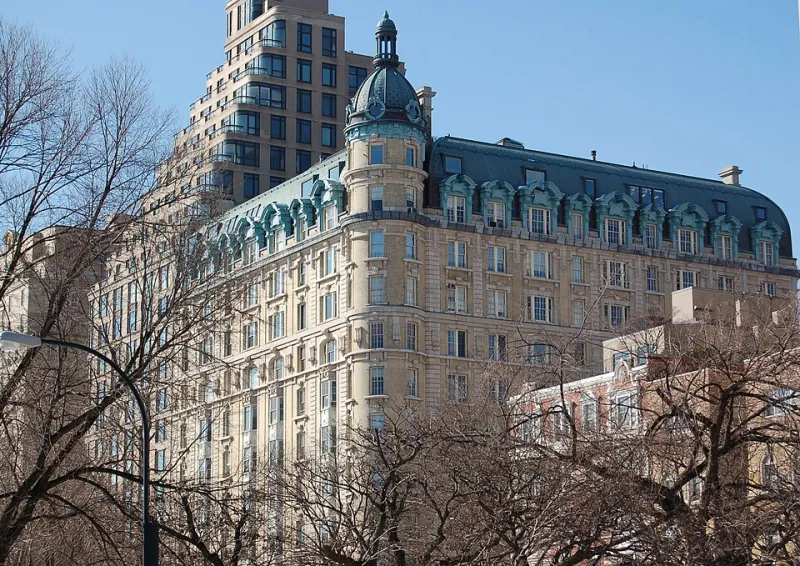
Photo: Bjeffway, Public domain, via Wikimedia Commons
The Mural on the Wall That Replaced the Block
On a stretch of a formerly industrial corridor in a mid-sized American city, a luxury residential tower recently unveiled a seven-story exterior mural depicting the faces of longtime residents who no longer live within walking distance of the building. The artist was local. The sentiment was earnest. The rents inside the building begin at $2,800 per month.
This scene, or some variation of it, is repeating itself across urban America. In neighborhoods from Atlanta's Old Fourth Ward to Chicago's Pilsen to East Austin, developers are commissioning historical design elements, sourcing reclaimed materials from demolished structures, and embedding neighborhood imagery into lobbies and common areas—all while presiding over the displacement of the very communities being memorialized. The result is a peculiar architectural phenomenon: buildings that look backward while pricing forward.
The question worth asking, with some rigor, is whether any of this matters—and to whom.
Design as Cultural Debt Repayment
The impulse to incorporate neighborhood history into new development is not entirely cynical. Urban planners and architects have long argued that contextual design—construction that responds to the material and spatial vocabulary of its surroundings—produces more cohesive cities. When a building references its environment through material choice, scale, or ornamental detail, it can create visual continuity that eases the psychological disruption of rapid change.
Some projects have executed this philosophy with genuine care. In Philadelphia's Fishtown neighborhood, certain mid-rise developments have retained original factory facades, integrating industrial-era brickwork into contemporary residential structures in ways that preserve authentic texture rather than simulate it. The distinction matters: authentic preservation involves retaining original fabric, while simulation involves manufacturing the appearance of history for aesthetic appeal.
The latter is far more common—and far more contested.
When a developer installs salvaged wood beams sourced from a demolished warehouse three states away, or commissions a mural depicting a neighborhood's 1970s street life for a building that has priced out everyone who lived that life, the gesture occupies an uncomfortable middle ground. It acknowledges history without accepting accountability for its disruption.
What Residents Actually Think
The perspective of incoming residents—those who choose to live in these newly constructed buildings—is rarely interrogated with much seriousness. The prevailing assumption is that design nostalgia functions as a selling point: it offers newcomers a sense of place, a shorthand connection to a neighborhood's perceived authenticity, without requiring them to have participated in building that authenticity.
Long-term residents and community advocates tend to read these gestures differently. Interviews conducted by urban researchers across multiple American cities have found that displaced residents frequently describe neighborhood-referencing design elements as a source of acute discomfort—a form of appropriation that compounds the injury of economic exclusion. Being depicted on the wall of a building you cannot afford to enter is not, for most people, an experience that registers as respect.
Some incoming residents, to their credit, share this discomfort. There is a growing cohort of urban dwellers who arrive in gentrified neighborhoods with a degree of self-awareness about their role in the process, and who find the performative historicism of their buildings alienating rather than reassuring. They did not move to a neighborhood to live inside a museum of what that neighborhood used to be.
The Limits of Architectural Conscience
Architecture is a powerful instrument, but it operates within constraints that design alone cannot resolve. A building can be materially honest, contextually sensitive, and aesthetically integrated into its surroundings and still function as an engine of economic exclusion. The two realities are not mutually exclusive, and conflating design quality with social equity has produced a great deal of well-intentioned confusion in urban development discourse.
This is not an argument against thoughtful design. Buildings that engage seriously with their historical context, that incorporate authentic preserved elements, and that commission art from artists with genuine ties to a neighborhood are, on balance, preferable to those that do not. The problem arises when design sensitivity is used to substitute for—rather than accompany—substantive commitments to affordability, community benefit agreements, or anti-displacement policy.
Several cities have begun to require that large residential developments include community land trust contributions or below-market-rate units as a condition of approval. These mechanisms are imperfect, frequently negotiated down, and inconsistently enforced—but they represent an acknowledgment that design cannot carry the full moral weight of development. A mural is not a subsidy.
Preservation, Simulation, and the Architecture of Apology
There is a meaningful difference between a development that genuinely preserves—that retains original structures, that keeps existing tenants in place through mixed-income models, that involves community stakeholders in design decisions from the outset—and one that simulates preservation after the fact. The former is rare and expensive. The latter is common and, in many markets, profitable.
The simulation model tends to follow a recognizable sequence. A neighborhood undergoes rapid demographic and economic change driven by new residential investment. Longtime residents and businesses are displaced by rising costs. Once the neighborhood has achieved a certain level of desirability, new developments begin incorporating references to the pre-gentrification era as a marketing differentiator—selling the memory of authenticity to residents who arrived after authenticity, as originally constituted, had departed.
This sequence is not unique to any single city or developer. It is structural, embedded in the economics of urban real estate, and unlikely to be resolved through design choices alone. What design choices can do is acknowledge the contradiction explicitly rather than paper over it.
What Honest Architecture Might Look Like
Some practitioners are attempting to reframe the relationship between new development and neighborhood history in more transparent terms. Rather than presenting historical references as celebration, they frame them as acknowledgment—a built record of what existed before, offered without the pretense that the building itself is a form of continuity.
This approach does not resolve the underlying tension. It does, however, refuse to aestheticize displacement as heritage. There is a meaningful difference between a building that says, in its material language, we are part of this neighborhood's ongoing story and one that says, more honestly, something was here before us, and we are marking that fact.
For urban residents navigating these questions—whether as newcomers, as longtime community members, or as both—the distinction is worth attending to. The buildings that will age with the most integrity are likely those that were honest about their position from the beginning: not claiming to be the neighborhood, but acknowledging their place within its complicated, continuing transformation.
Memory embedded in architecture is not the same as justice. But architecture that refuses to pretend otherwise is, at minimum, a more honest place to live.