Decibels and Dollars: How Acoustic Performance Is Becoming a Primary Driver of Urban Property Value

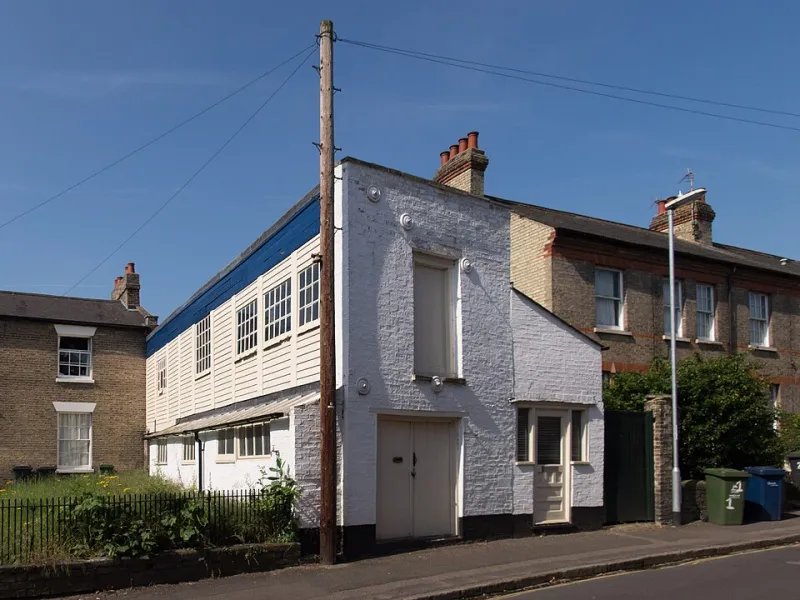
Photo: Juanity41, CC BY-SA 3.0, via Wikimedia Commons
For decades, the standard pitch for urban residential living centered on proximity — to transit, to employment corridors, to cultural amenities. What that pitch rarely acknowledged was the persistent background roar that comes bundled with every prime address: the garbage trucks at 5 a.m., the neighbor's renovation project bleeding through shared walls, the low-frequency rumble of a subway line three floors below. Residents absorbed these intrusions as the implicit price of city life.
That calculus is changing. Quietly, and then all at once, acoustic performance has begun registering as a genuine differentiator in how urban residents evaluate and select residential properties. The implications for developers, investors, and property managers are significant — and many in the industry are only beginning to understand what they have been leaving on the table.
The Science Has Been Speaking for Years
The research community reached its conclusions well before the real estate market caught up. The World Health Organization has classified environmental noise as the second-largest environmental health risk in the Western world, trailing only air pollution. Studies published in journals including Environmental Health Perspectives and The Lancet have linked chronic exposure to urban noise with elevated cortisol levels, disrupted sleep architecture, increased cardiovascular risk, and measurable cognitive impairment in children living near high-traffic corridors.
In the United States, the Environmental Protection Agency estimates that more than 100 million Americans are regularly exposed to noise levels sufficient to cause health consequences. For urban residents — particularly those in dense residential buildings along commercial streets, flight paths, or rail lines — that exposure is not occasional. It is structural.
What this means for the residential market is that a building's acoustic environment is not merely a comfort variable. It is a health variable. And as residents become more informed about that distinction, their willingness to pay a premium for genuine acoustic protection is increasing accordingly.
What the Market Data Is Beginning to Reflect
Translating acoustic quality into a precise dollar figure remains methodologically complex, but the directional evidence is accumulating. Research conducted across multiple urban markets has found that properties with measurably superior sound insulation — verified through independent testing rather than developer marketing — command lease premiums ranging from six to fourteen percent over comparable units in the same submarket. In high-noise corridors, that gap widens further.
Perhaps more telling than premium pricing is the retention data. Property managers operating buildings with above-average acoustic performance consistently report lower annual turnover. Given that the average cost of turning a unit — including vacancy loss, cleaning, repairs, and leasing commissions — routinely runs between one and two months of rent in major metropolitan areas, the financial value of retaining a resident who would otherwise leave due to noise-related dissatisfaction is substantial and compounding.
Appraisers in several major markets have begun formally incorporating acoustic assessments into their methodologies, a development that signals the transition of sound quality from a soft amenity to a hard valuation input.
Where Developers Are Falling Short
Despite the evidence, acoustic quality remains one of the most systematically underinvested dimensions of residential construction. Several structural factors explain the gap.
First, acoustic performance is invisible. A rooftop terrace photographs beautifully and sells itself in marketing materials. A resilient channel assembly between floors does not. The incentive structure of development — in which pre-sale or pre-lease marketing drives early momentum — tends to reward visible amenities and penalize invisible ones, regardless of their functional value.
Second, acoustic upgrades carry upfront costs that are easy to cut during value-engineering reviews. Upgrading from standard drywall assemblies to double-stud or staggered-stud wall systems, adding mass-loaded vinyl barriers, or specifying acoustic underlayment beneath flooring can add meaningful line items to a construction budget. When a project is under margin pressure, these are among the first items to be reduced or eliminated.
Third, the industry's standard testing protocols are often insufficient. Sound Transmission Class ratings — the most commonly cited metric — measure only mid-frequency airborne sound. They do not capture low-frequency noise from mechanical systems, impact noise from foot traffic above, or the structural-borne vibrations that residents in buildings near transit infrastructure find most disruptive. A building can earn a respectable STC rating and still deliver a genuinely poor acoustic experience.
The Features That Command Real Premiums
For developers and operators willing to invest in acoustic performance as a competitive differentiator, the technical toolkit is well established. The question is one of commitment rather than knowledge.
Floor-ceiling assemblies represent the highest-impact intervention in multi-family construction. Systems incorporating resilient clips, acoustic batts, and mass-loaded vinyl consistently outperform standard assemblies on both airborne and impact noise metrics. In concrete construction, the addition of floating floor systems — in which the finished floor is mechanically decoupled from the structural slab — produces measurable improvements in the low-frequency range where standard STC testing falls short.
Window specifications are equally consequential, particularly in buildings along arterial streets or within airport noise contours. Laminated glass, upgraded frame seals, and double or triple glazing with asymmetric glass thickness can reduce exterior noise intrusion by twenty decibels or more relative to standard commercial window packages — a difference that is immediately perceptible to occupants.
Mechanical system placement and isolation deserve more attention than they typically receive. HVAC equipment, elevator machinery, and parking garage ventilation systems are among the most common sources of low-frequency noise complaints in urban residential buildings. Vibration isolation mounts, duct lining, and strategic placement of mechanical rooms relative to occupied units are investments with meaningful payback in resident satisfaction and retention.
Finally, corridor and entry design — often treated purely as circulation space — has a direct bearing on the acoustic privacy of adjacent units. Solid-core doors, acoustic gaskets, and sound-absorbing finishes in common hallways reduce the transmission of building social noise into private residential spaces in ways that residents notice immediately.
Reframing the Investment Thesis
The most productive reframe for developers and investors considering acoustic upgrades is not to treat them as a cost center, but as a revenue driver with a quantifiable return profile. A building that retains residents longer, commands a modest lease premium, and earns a reputation for quality in a market where that quality is genuinely scarce will outperform its acoustic-indifferent competitors across nearly every financial metric.
The urban residential market is maturing. Residents are more informed, more vocal about their priorities, and more willing to walk away from properties that fail to meet their expectations for livability. Sound — or rather, the control of it — has moved from a background consideration to a foreground one.
Developers who recognize that shift early will find themselves holding a durable competitive advantage. Those who continue treating acoustic performance as an afterthought will find it appearing, with increasing regularity, in their vacancy reports.